Why New Zealand Bee Propolis Deserves a Spot in Your Daily Health Regimen
NZ bee propolis: the flavonoid science behind immune support, oral health, and microbiome modulation, with clear contraindications for informed daily use.

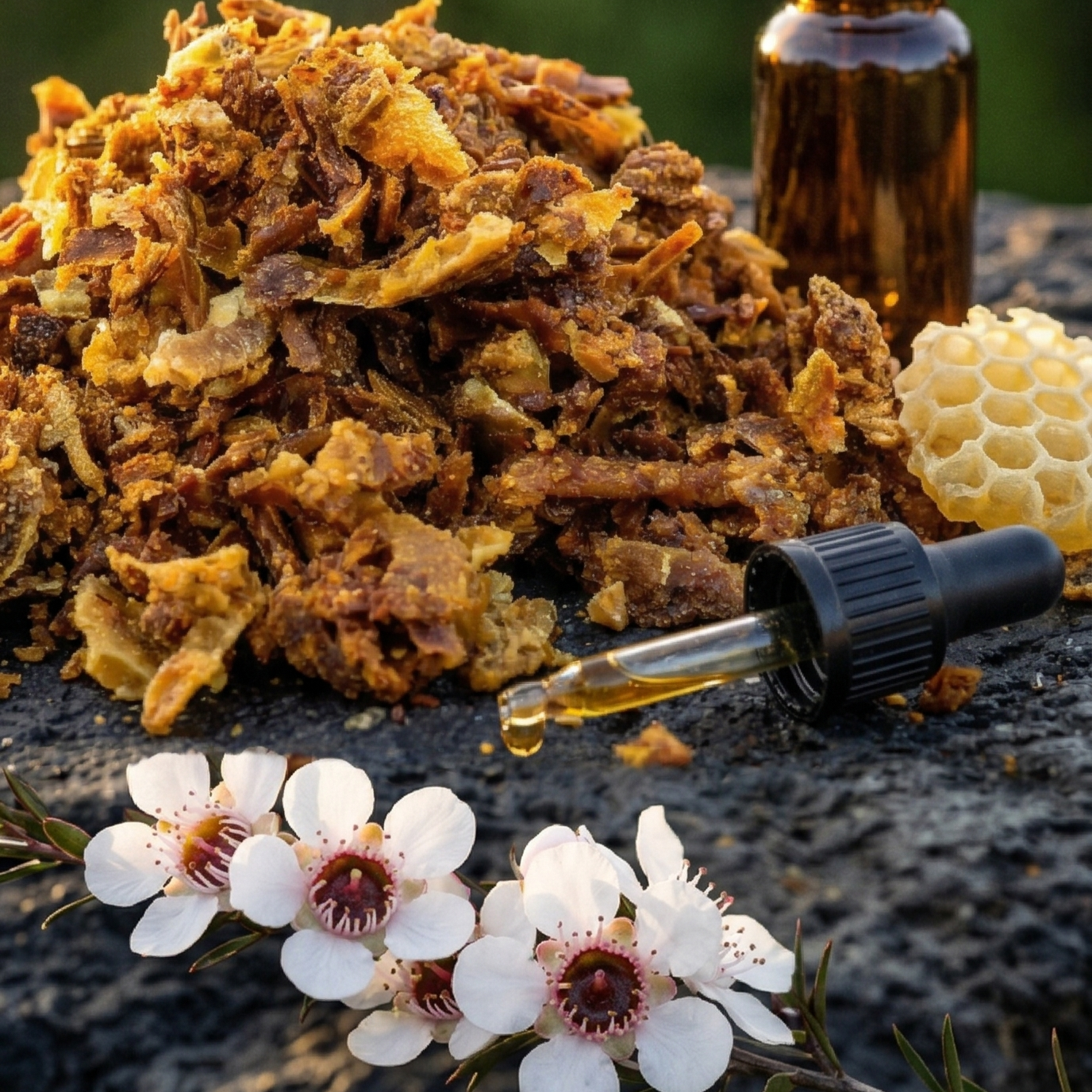
Most people who keep bees know propolis as the substance that glues everything together. It seals gaps, coats surfaces, and makes hive inspections genuinely difficult. When you work with enough hives, as I have across Northland since 2013, you develop an appreciation for what propolis actually is: not a structural convenience, but the hive's primary immune defence system. The bees do not collect it once and leave it. They actively manage it, applying it to every surface the colony depends on, and producing more when the colony is under threat.
That biological function is the starting point for understanding why propolis has attracted serious scientific attention as a human health supplement. This article covers what the research actually shows, what makes New Zealand propolis chemically distinctive, how propolis and mānuka honey work differently and complementarily, and the contraindications every informed user should know before starting a daily propolis regimen.
What Propolis Is and Where It Comes From
Propolis is not honey and it is not beeswax. It is a resinous composite that bees produce by collecting sap and resin exudates from tree buds and bark, which they then mix with their own enzymes and beeswax inside the hive. The result is a sticky, dark material with a complex and highly variable bioactive profile that reflects the specific botanical sources the bees foraged from.
In New Zealand, honeybees forage on a diverse range of native and introduced plants. Where hives have access principally to native flora, particularly native species of the Leptospermum and Kunzea genera (which include mānuka and kānuka), the resulting propolis develops a compound profile that differs significantly from propolis produced in regions dominated by Northern Hemisphere flora. Research published in 2025 by Manley-Harris and colleagues at the University of Waikato characterised propolis produced in areas of dense native New Zealand forest, finding a compound profile dominated by diterpenoids rather than the flavonoids typical of poplar-type propolis, with the compounds isocupressic acid, manool, and ferruginol among those identified [1]. These diterpenoid-rich samples showed good antioxidant activity and inhibition of both methicillin-resistant and methicillin-sensitive Staphylococcus aureus in laboratory testing [1].
At Tōtika, our hives sit in the Bay of Islands, surrounded by native bush including both mānuka and kānuka. The propolis our bees produce reflects that botanical environment directly. Geographic origin is not a marketing claim in the context of propolis: it is a determinant of chemical composition, which is a determinant of bioactivity.
A 2024 study from Massey University characterising New Zealand propolis from multiple regions found considerable variation in volatile organic compound profiles across sampling sites, consistent with the influence of local flora [2]. Earlier comparative research using 46 New Zealand propolis samples found that New Zealand propolis generally contained higher total phenolic and flavonoid content and higher antioxidant activity than comparable overseas samples, and contained higher concentrations of the flavonoid galangin than international samples in the comparison [3].
The Key Bioactive Compounds and Their Roles
The biological properties attributed to propolis are not produced by a single compound. They arise from a complex mixture working in concert. The main categories of bioactive constituents are:
Flavonoids
Flavonoids, including pinocembrin, galangin, chrysin, and quercetin, are the most extensively studied components of propolis. They are powerful antioxidants, meaning they neutralise reactive oxygen species that contribute to cellular damage and chronic inflammation. They also exhibit direct antimicrobial activity against a broad range of pathogens and anti-inflammatory effects through inhibition of specific inflammatory signalling pathways [4].
Caffeic Acid Phenethyl Ester (CAPE)
CAPE is among the most intensively researched propolis compounds. It is found at notably high concentrations in New Zealand propolis, particularly in samples from native-flora-rich environments. CAPE has been shown in laboratory research to modulate inflammatory responses through inhibition of NF-κB signalling pathways, inhibit microbial growth through multiple mechanisms, and demonstrate antioxidant activity through reduction of reactive oxygen species production [4]. It is important to note that the majority of CAPE research has been conducted in vitro or in animal models. Human clinical evidence specific to CAPE remains limited.
Phenolic Acids and Terpenes
Phenolic acids including caffeic acid and coumaric acid contribute additional antimicrobial and antioxidant properties. Terpenes, including the diterpenoids characteristic of New Zealand native-flora propolis, add further antibacterial and anti-inflammatory dimensions to the overall compound profile [1].
The interaction between these compound classes is important. Research suggests that the combined effect of multiple flavonoid compounds is more potent against viral and bacterial targets than any single compound in isolation, which is one reason why standardised extracts of full-spectrum propolis tend to produce stronger results in studies than isolated single-compound preparations [4].
What the Evidence Shows for Human Health
Propolis has been studied across a wide range of health applications. The quality and strength of evidence varies significantly between application areas. Below is an honest summary of where the research sits, with study types clearly labelled.
Immune Modulation and Respiratory Health
Propolis is not simply an immune stimulant. The more accurate characterisation, supported by both in vitro and human clinical evidence, is that it acts as an immunomodulator: it can both activate immune responses when needed and regulate excessive inflammation [5]. A 2021 randomised controlled trial found that a standardised propolis extract reduced the risk of upper respiratory infection by 31 per cent compared to placebo when taken daily during cold and flu season. The mechanism involves stimulation of macrophage activity, enhancement of natural killer cell function, and modulation of pro-inflammatory cytokines including TNF-α, IL-1β, and IL-6 [5].
A systematic review and meta-analysis published in Frontiers in Nutrition in 2025, analysing randomised controlled trials, found that propolis supplementation significantly decreased markers of inflammation and oxidative stress, including C-reactive protein (CRP) and TNF-α, in adult subjects [6]. The authors noted that effects on oxidative stress markers were more pronounced at doses at or above 1,000 mg per day in the studies analysed [6].
Oral Health
This is one of the most consistently supported application areas in propolis research. Multiple randomised controlled trials have examined propolis in the context of oral bacterial control, gingivitis, and periodontal health. A 2021 double-blind randomised trial found propolis mouthwash to be effective in reducing clinical periodontal parameters in patients with gingivitis [cited in review, 4]. The mechanism is straightforward: the broad-spectrum antimicrobial activity of propolis flavonoids inhibits oral pathogenic bacteria including Streptococcus mutans, the primary driver of dental caries, and Porphyromonas gingivalis, a key periodontal pathogen.
Antioxidant Protection
Free radical production is a normal consequence of cellular metabolism, but chronic oxidative stress, where free radical production consistently exceeds the body's antioxidant capacity, is implicated in the progression of cardiovascular disease, metabolic conditions, and accelerated cellular ageing. Propolis flavonoids are potent free radical scavengers. The 2025 meta-analysis confirmed that propolis supplementation significantly increased total antioxidant capacity (TAC) and glutathione levels in subjects, alongside reductions in malondialdehyde (MDA), a marker of oxidative stress-related cellular damage [6].
Gut Microbiome
This is an emerging area of propolis research rather than a well-established one. In vitro and some animal studies suggest that propolis bioactives can selectively inhibit pathogenic bacteria while supporting the survival of beneficial gut flora species. The anti-inflammatory properties relevant to gut health include inhibition of NF-κB pathways that contribute to intestinal inflammation [5]. Human clinical trials in this specific area remain limited and this application should be considered preliminary.
How Propolis and Mānuka Honey Work Differently
Propolis and mānuka honey are often described together, and for good reason: they come from the same hive environment and they act on similar biological targets through different mechanisms. But they are not interchangeable.
Mānuka honey's primary bioactive is methylglyoxal (MGO), a chemically stable antibacterial compound that works through direct antimicrobial action, osmotic dehydration of bacterial cells, and disruption of bacterial cell membranes. MGO is produced through a non-enzymatic conversion from dihydroxyacetone (DHA) in the nectar of Leptospermum scoparium. It is quantifiable, certifiable, and directly proportional to antibacterial potency. For a deeper explanation of how MGO works and how it is measured, see our complete MGO science guide.
Propolis does not contain MGO. Its antimicrobial activity comes from a different set of mechanisms: flavonoid-mediated disruption of bacterial cell walls and membranes, inhibition of bacterial enzyme systems, and antiviral activity through interference with viral replication at the cell entry stage. Its immune-modulating effects operate through cytokine signalling pathways that MGO does not directly address.
The case for combining them rests on this complementarity. Mānuka honey provides stable, quantifiable, direct-contact antibacterial potency. Propolis provides broader-spectrum antimicrobial coverage including antiviral and antifungal activity, plus immunomodulatory and antioxidant properties that operate systemically. They address overlapping but distinct biological targets. Neither replaces the other.
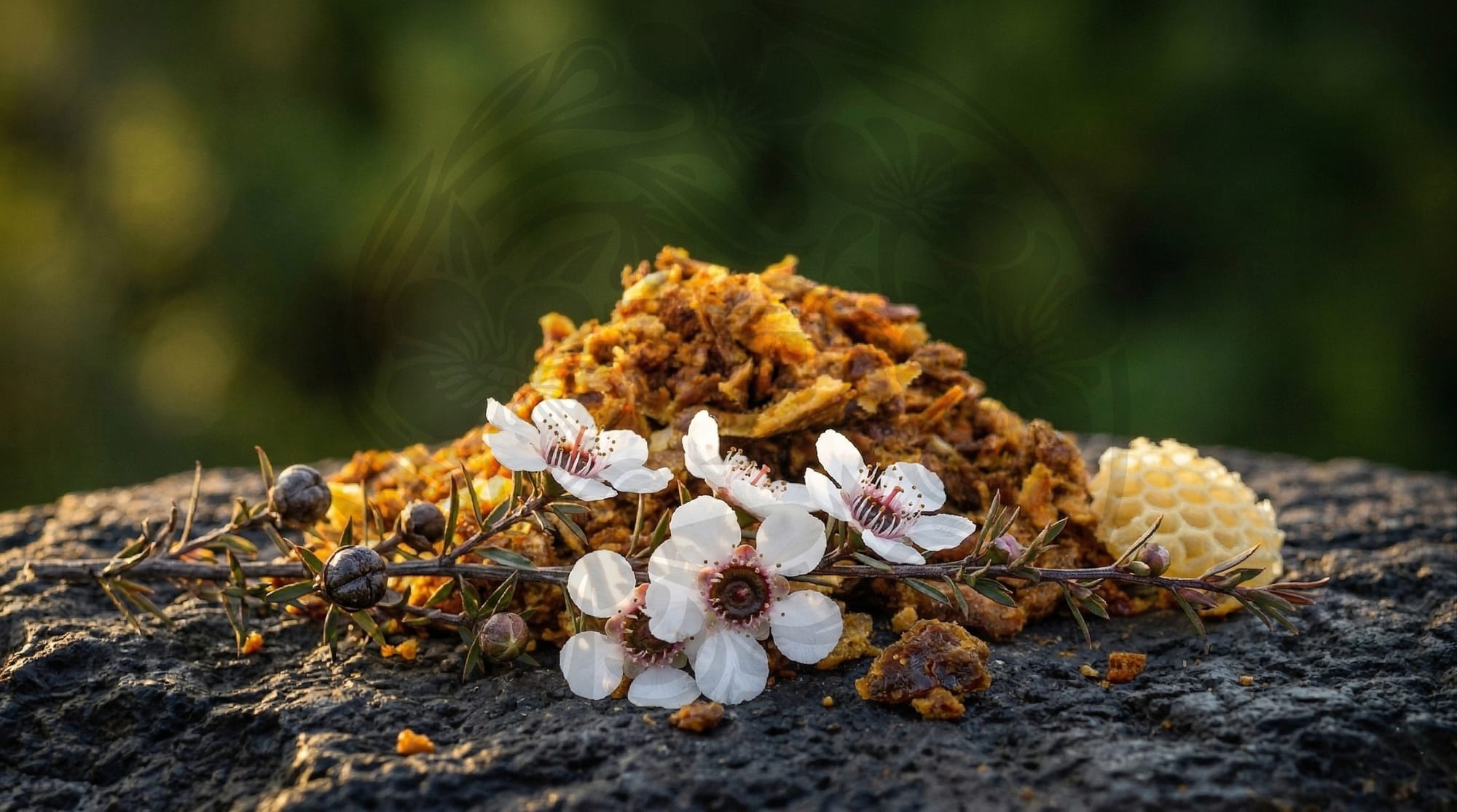
Mānuka blossoms from Tōtika's Bay of Islands hives. The resin bees collect from these flowers and native bush species is the botanical source of New Zealand propolis.
Forms, Bioavailability, and What to Look for in a Product
Propolis is commercially available in several forms, each with different practical characteristics:
| Form | How It Is Taken | Key Consideration | Best Suited For |
|---|---|---|---|
| Liquid extract / tincture | Drops in water or direct | Fastest absorption; ethanol base may not suit all | Daily immune support; sore throat |
| Capsules / softgels | Swallowed with water | Convenient; slower release; easier for precise amounts | Daily supplementation routine |
| Raw propolis | Chewed directly | Highly variable potency; difficult to standardise | Direct oral contact applications |
| Spray | Applied to throat | Direct local delivery; limited systemic effect | Acute throat irritation; oral use |
The most important quality indicator for any propolis product is independent laboratory testing confirming total flavonoid content. Without this, you cannot know whether a product contains meaningful levels of the bioactive compounds the research is built on. A product that lists "propolis" without a flavonoid or CAPE content measure is making no verifiable quality commitment. This is analogous to a mānuka honey labelled without an MGO reading: the word alone tells you nothing about potency.
New Zealand propolis is well placed for standardised testing given the growing analytical infrastructure around NZ bee products, and a number of producers including Tōtika are working towards independently verified flavonoid profiles. Our propolis drops are sourced from the same Bay of Islands hives as our certified mānuka honey, giving us direct control over the botanical environment our bees forage in.
Who Should Exercise Caution: Contraindications and Drug Interactions
Propolis is generally well tolerated in healthy adults. However, there are specific groups for whom caution is warranted, and several drug interactions with clinical significance that must be addressed honestly.
Bee Product Allergy
Anyone with a known allergy to bee venom, honey, pollen, or other bee products should not use propolis without prior medical consultation. Propolis is a complex botanical resin and can trigger allergic reactions including contact dermatitis and, in rare cases, more serious systemic reactions in sensitised individuals. Patch testing before regular use is a sensible precaution for anyone with a history of bee-related allergy [7].
Warfarin and Anticoagulant Medications
This is the most clinically significant interaction. Propolis has antiplatelet properties that may reduce blood clotting. When taken alongside anticoagulant drugs such as warfarin, or antiplatelet drugs such as aspirin, clopidogrel, or heparin, the combined effect may increase bleeding risk. A systematic review of propolis drug-herb interactions published in Frontiers in Pharmacology in 2022 specifically identified anticoagulant interaction as the primary pharmacodynamic concern with propolis supplementation [7]. Anyone on anticoagulant therapy must consult their prescribing physician before using propolis.
CYP450 Enzyme Interactions
Propolis compounds can influence the cytochrome P450 enzyme system in the liver, which is responsible for metabolising a wide range of pharmaceutical drugs including certain statins, immunosuppressants, antidepressants, and beta-blockers. This means propolis has the potential to either increase or decrease the effective blood concentration of these medications. Anyone on CYP450-metabolised medications should discuss propolis use with their prescribing physician or pharmacist [7].
Pregnancy and Lactation
The safety data for propolis use during pregnancy is insufficient to support a recommendation for or against it. Current guidance from clinical reference databases rates propolis as category C in pregnancy (use with caution if benefits outweigh risks, given limited human data). Given this uncertainty, avoidance during pregnancy is the prudent position unless a healthcare professional advises otherwise [7].
Pre-operative Context
Due to the antiplatelet effects noted above, propolis should be discontinued at least two weeks before any planned surgical procedure [7].
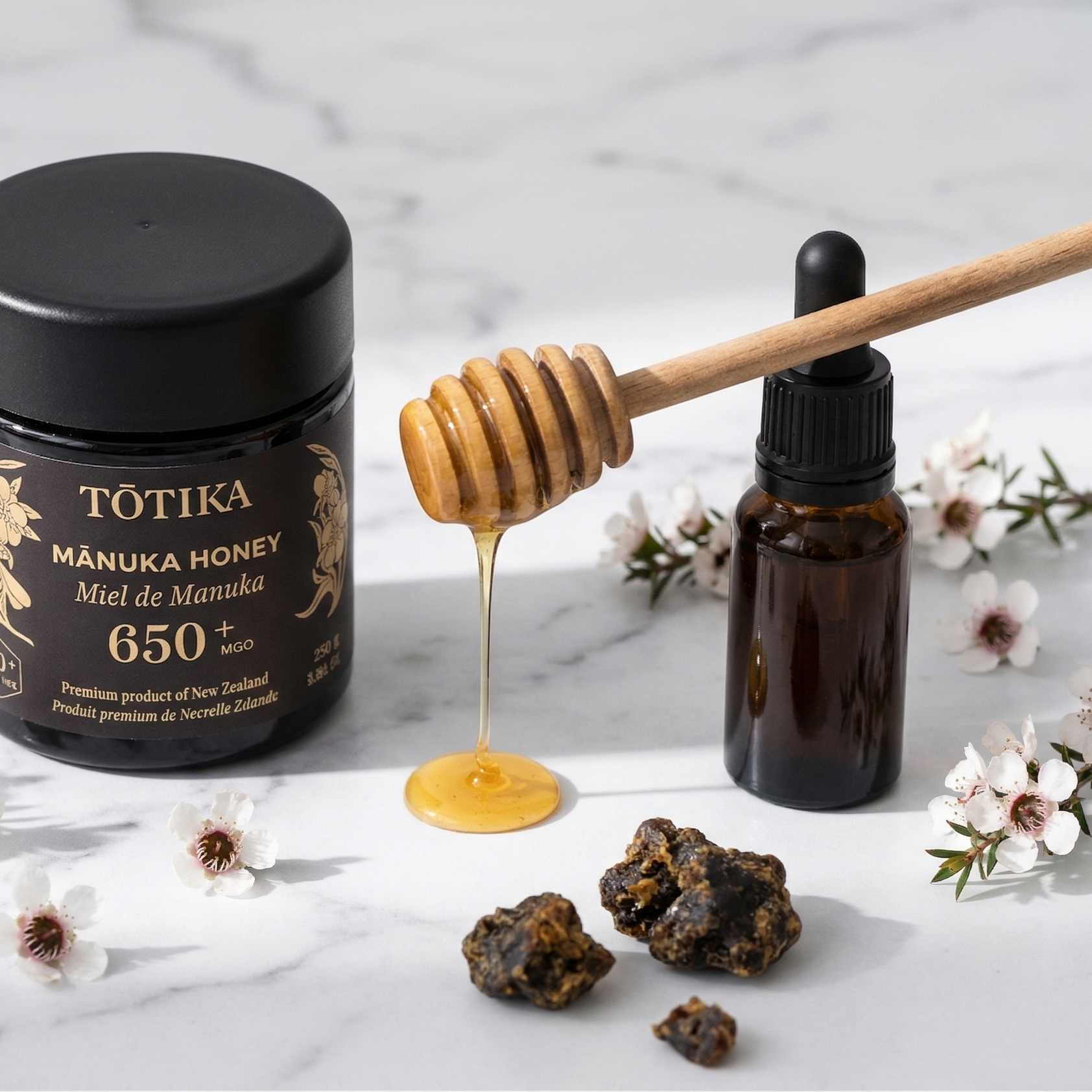
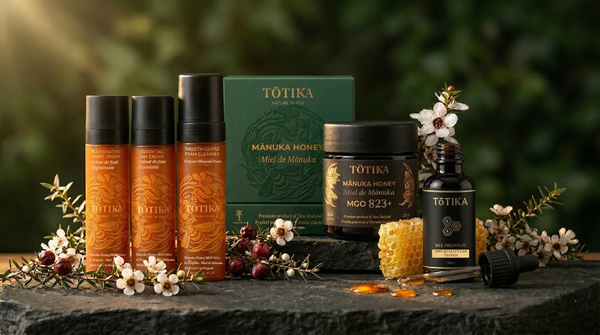
Mānuka honey and bee propolis from the same Bay of Islands hives: complementary bioactives with different mechanisms of action.
Frequently Asked Questions
What is bee propolis used for?
Propolis is taken as a supplement for immune support, oral health, antioxidant protection, and general wellbeing. It has been studied in randomised controlled trials for upper respiratory tract infection prevention, oral bacterial control, and reduction of inflammatory markers. It is also used topically for skin and wound care applications, which is a separate application area.
Is New Zealand propolis different from other propolis?
Yes, in a specific and documented way. Where New Zealand bees forage on native flora, the propolis they produce contains diterpenoids rather than the flavonoids typical of European or American poplar-type propolis. New Zealand propolis has also been shown in comparative studies to contain higher total flavonoid content and higher antioxidant activity than international samples. The botanical source determines the compound profile, and New Zealand's unique native flora produces a distinctive result.
Can I take propolis and mānuka honey together?
Yes. They complement each other through different mechanisms. Mānuka honey provides direct-contact antibacterial activity through stable MGO; propolis provides broader-spectrum antimicrobial coverage including antiviral activity, plus immunomodulatory and antioxidant effects. Many people who use one do benefit from using both, particularly during winter or periods of immune stress. Neither replaces the other.
Is propolis safe to take every day?
For healthy adults without the contraindications described above, propolis is generally considered safe for daily use. Clinical trials have used daily supplementation for periods of up to 13 months without reported safety concerns in healthy populations. However, anyone on prescription medication, particularly anticoagulants, should consult their doctor first.
Can propolis replace antibiotics?
No. Propolis has documented antimicrobial activity against a broad range of pathogens in laboratory settings, and some human studies support its use for specific applications such as oral health and upper respiratory support. However, it does not reach the therapeutic concentrations in tissues required to replace prescription antibiotics for bacterial infections. It may complement antibiotic therapy in specific contexts, but that is a clinical decision for a prescribing physician, not a supplement choice.
What should I look for on a propolis label?
Look for independently verified flavonoid content (either total flavonoids or a specific CAPE measurement), geographic origin, the method of extraction, and the concentration of propolis per serving. Without a flavonoid or bioactive marker measurement, you cannot assess the actual potency of the product. New Zealand origin with lab-tested bioactive levels is the quality benchmark to look for.
Does propolis interact with any medications?
Yes, with clinical significance. The most important interactions are with anticoagulant drugs (warfarin, aspirin, heparin), where propolis may enhance bleeding risk, and with CYP450-metabolised drugs (certain statins, antidepressants, immunosuppressants), where propolis may affect drug metabolism and effective blood concentration. Always inform your doctor and pharmacist if you are taking or considering propolis alongside prescription medications.
Reviewed by: Kim Slemint, RN, Clinical Advisor, Tōtika Health. Kim reviews all health-related claims in Tōtika's published content to ensure accuracy, appropriate framing of evidence, clear contraindication disclosure, and alignment with responsible consumer health communication.
References
- Manley-Harris, M., Grainger, M. N. C., Peters, L. M., and Te Rire-McNeil, S. T. (2025). Composition and bioactivity of propolis derived from New Zealand native forest. Fitoterapia, 181, 106412. https://doi.org/10.1016/j.fitote.2025.106412
- Mountford-McAuley, R., Robertson, A., Taylor, M., and Clavijo McCormick, A. (2024). Characterisation of New Zealand propolis from different regions based on its volatile organic compounds. Molecules, 29(13), 3143. https://doi.org/10.3390/molecules29133143
- University of Auckland Research Space. Propolis from New Zealand and international sources: analysis and comparison of antioxidant and polyphenolic profiles. Retrieved from researchspace.auckland.ac.nz
- Martinotti, S., Bonsignore, G., and Ranzato, E. (2025). Propolis: a natural substance with multifaceted properties and activities. International Journal of Molecular Sciences, 26(4), 1519. https://doi.org/10.3390/ijms26041519
- Braakhuis, A. (2019). Evidence on the health benefits of supplemental propolis. Nutrients, 11(11), 2705. https://doi.org/10.3390/nu11112705 (PMC6893770)
- Frontiers in Nutrition (2025). Propolis supplementation on inflammatory and oxidative stress biomarkers in adults: a systematic review and meta-analysis of randomised controlled trials. https://doi.org/10.3389/fnut.2025.1542184
- Moricz, A. M., et al. (2022). An overview of the evidence and mechanism of drug-herb interactions between propolis and pharmaceutical drugs. Frontiers in Pharmacology, 13, 876183. https://doi.org/10.3389/fphar.2022.876183