Winter Wellness from the Hive: Mānuka Honey, Propolis and Bee Pollen as Natural Supplements
The peer-reviewed science of mānuka honey, NZ propolis and bee pollen as winter wellness supplements. What the evidence shows, from a scientist-beekeeper.
The science of safe sun exposure for vitamin D: how much you need, when to stop, and what sunscreen actually does to your levels.
Sara Samavati explains what bee propolis actually is, why New Zealand's botanical environment gives it a distinct bioactive profile, and what peer-reviewed research shows about how it works in skincare.
What separates mānuka honey from supermarket honey: MGO, non-peroxide activity, MPI certification, and why a scientist-beekeeper says the price is justified.
Sara Samavati and Dr Isaac Flitta explain how MGO 800+ mānuka honey and bee propolis treat stress rashes, eczema, and skin barrier damage with clinical evidence.
NZ bee propolis: the flavonoid science behind immune support, oral health, and microbiome modulation, with clear contraindications for informed daily use.
Why MGO mānuka honey is a metabolically superior sweetener, the fructose science, liver enzymes, and what a PhD beekeeper eats instead.
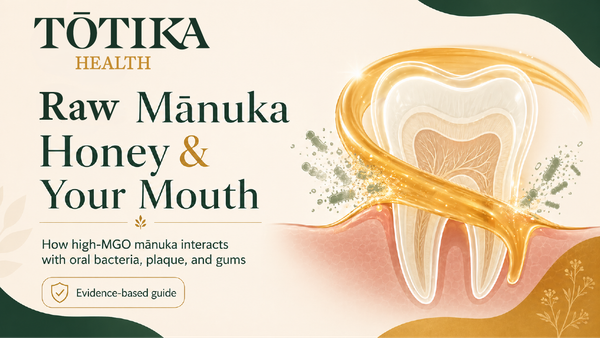
MGO mānuka honey versus Streptococcus mutans, gum disease, and tooth decay: the peer-reviewed evidence from a NZ.
MGO (methylglyoxal) is the measurable compound that determines manuka honey's antibacterial potency. Dr Isaac Flitta explains the science of MGO grading, DHA conversion, NPA, and MPI certification, with real laboratory data from Bay of Islands hives.