What Is MGO in Manuka Honey? A Scientist's Complete Guide
MGO (methylglyoxal) is the measurable compound that determines manuka honey's antibacterial potency. Dr Isaac Flitta explains the science of MGO grading, DHA conversion, NPA, and MPI certification, with real laboratory data from Bay of Islands hives.

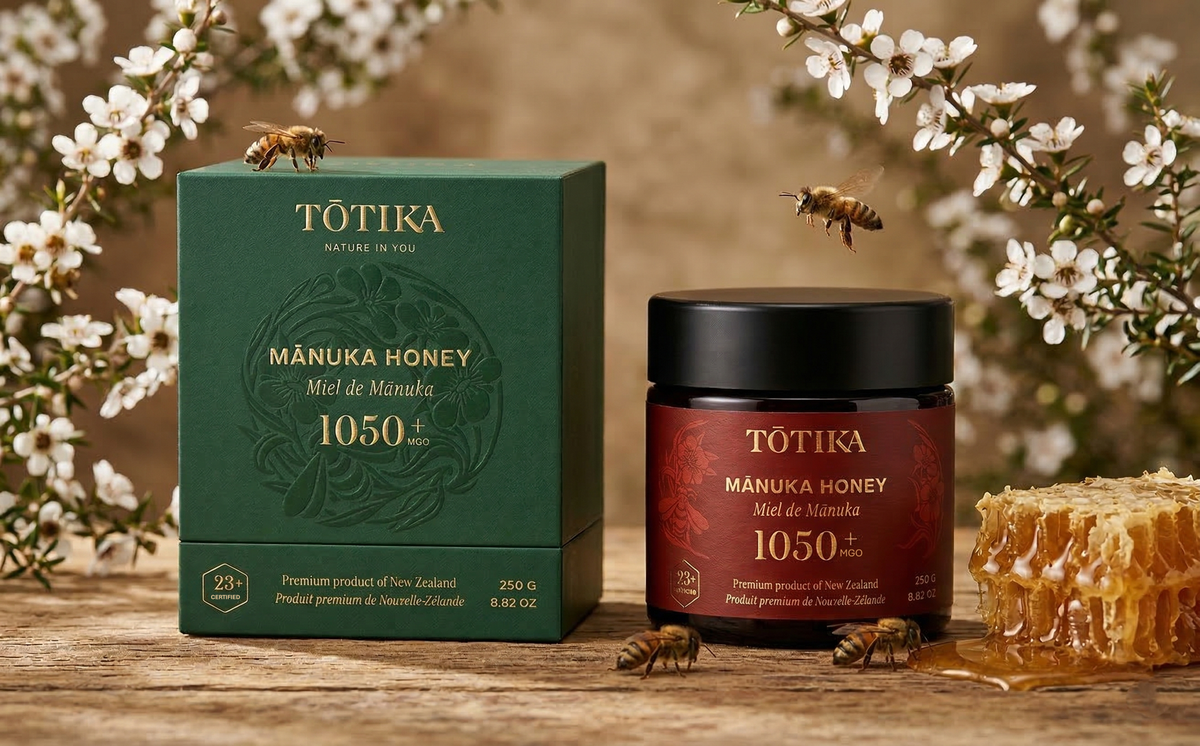
Updated April 2026 | First published June 2018 | Category: MGO Science / Wellbeing
MGO stands for methylglyoxal, the primary antibacterial compound in authentic New Zealand manuka honey. The higher the MGO number, the greater the antibacterial potency: MGO 250 suits daily wellness, MGO 500 supports immune and digestive health, and MGO 800 and above is used in wound care and clinical settings. All genuine NZ manuka honey must pass five MPI chemical markers before it can be exported.
If you have spent any time reading manuka honey labels, you have encountered the letters MGO followed by a number: 250, 400, 850, 1050. You are looking at a measurement. A precise, independently verified, peer-reviewed measurement of the compound that makes manuka honey scientifically distinct from every other honey on earth.
This guide explains exactly what that measurement means, how it is produced, how it is certified, and what the New Zealand Government requires before any producer can legally call their product manuka honey. Throughout, I will reference Tōtika Health’s own IANZ-accredited laboratory results across multiple batches and grades as real-world illustrations of what certified testing actually looks like in practice.
What Does MGO Stand For?
MGO stands for methylglyoxal: a naturally occurring organic compound found in high concentrations in authentic New Zealand manuka honey. The number next to MGO on a certified label represents the milligrams of methylglyoxal present per kilogram of honey. MGO 1050+ means a minimum of 1,050 mg of methylglyoxal per kilogram, the highest certified grade commercially available.
Methylglyoxal is not a marketing concept. It is a measurable, quantifiable chemical entity identified by Professor Thomas Henle of the Technical University of Dresden, whose landmark 2008 research established that MGO is the dominant antibacterial compound in manuka honey, and that its concentration correlates directly and linearly with antibacterial potency. A 2022 study published in PLOS ONE (Green et al.) confirmed this relationship across 29 commercial manuka honey samples, finding strong correlation between MGO content and antibacterial activity measured by multiple independent methods [1, 2].
Why Manuka Honey Is Different From Other Raw Honey
All raw honey has some antibacterial activity. It comes from hydrogen peroxide: an enzyme called glucose oxidase catalyses the oxidation of glucose, releasing hydrogen peroxide, which displays antimicrobial activity when applied to wound tissue. This mechanism is real, but fragile. Heat, light, and the catalase enzyme naturally present in body fluids all degrade hydrogen peroxide activity rapidly.
Manuka honey does something different. In addition to hydrogen peroxide activity (common to all raw honey), manuka honey contains a second, independent antibacterial mechanism: non-peroxide activity (NPA). For years, scientists knew this NPA existed but could not identify its source. Professor Henle’s 2008 research resolved this. The source is methylglyoxal.
Unlike hydrogen peroxide, MGO is chemically stable. It does not degrade with heat or light. Its antibacterial effect persists even after the honey is applied to a wound site where catalase would otherwise neutralise standard honey activity. This stability is precisely why clinical researchers and wound care practitioners specify high-MGO manuka honey for medical applications [3].
How MGO Forms: The DHA Conversion Pathway
Methylglyoxal is not present in meaningful concentrations in fresh manuka nectar. It develops through a slow, non-enzymatic conversion from a precursor compound called dihydroxyacetone (DHA). Here is the sequence:
- Bees collect nectar from Leptospermum scoparium, the manuka plant, native to New Zealand and found in exceptional concentration in the Northland region and Bay of Islands.
- The nectar contains naturally high levels of DHA, a compound essentially unique to manuka at meaningful concentrations.
- Inside the hive and during storage, DHA converts gradually to MGO through a chemical reaction that continues for 12 to 60 months or more after harvesting.
- The MGO level in the final honey reflects both the DHA concentration in the original nectar (determined by specific flora and latitude) and the time elapsed during storage.
This is why provenance is not optional. The Bay of Islands is not simply a picturesque backdrop. It is a specific latitude, with specific flora, producing specific DHA concentrations in manuka nectar that cannot be replicated elsewhere. The laboratory data below demonstrates this directly.
Real Laboratory Data: What Certified Testing Actually Shows
The following data comes from Tōtika Health batches tested by R J Hill Laboratories Limited, Hamilton, an IANZ-accredited laboratory. IANZ accreditation is internationally recognised through the ILAC Mutual Recognition Arrangement, meaning these results are accepted by trading partners in every market Tōtika sells into. We present data across two testing rounds and two grades to illustrate the consistency and transparency of our certification process.
Batch Comparison Across Grades (Hill Labs Certificates 4091693 and 3951021)
| Feb 2026 (MGO 550+ grade) | Aug 2025 Batch 207258 (MGO 850+ grade) | Aug 2025 Batch 207259 (MGO 850+ grade) | |
|---|---|---|---|
| Methylglyoxal (MGO) | 587 mg/kg | 936 mg/kg | 927 mg/kg |
| Dihydroxyacetone (DHA) | 1,451 mg/kg | 2,740 mg/kg | 2,990 mg/kg |
| 5-Hydroxymethylfurfural (HMF) | 14.1 mg/kg | 10.0 mg/kg | 7.8 mg/kg |
| Non-Peroxide Activity (NPA) | 16.2% Phenol Eq. | 21.5% Phenol Eq. | 21.4% Phenol Eq. |
| MPI Classification | Monofloral | Monofloral | Monofloral |
| Peak MGO at 20°C storage | 960 mg/kg | 1,660 mg/kg | 1,720 mg/kg |
Three points from this data are worth understanding in depth.
First, the DHA figures. The August 2025 MGO 850+ batches carry 2,740 and 2,990 mg/kg of DHA respectively, almost double the 550+ batch. DHA is the active precursor converting into MGO: a higher DHA reading means a larger reservoir of conversion potential still at work. This directly reflects the greater monofloral purity of the 850+ grade: more manuka nectar means more DHA, which means more MGO over time.
Second, the HMF figures. HMF (5-hydroxymethylfurfural) is a heat damage and age indicator. The lower the number, the fresher and better-handled the honey. The acceptable upper limit is 40 mg/kg. At 7.8 mg/kg, batch 207259 is among the cleanest readings possible for commercially harvested honey. All three Tōtika batches are well within the limit.
Third, the peak MGO potential. Stored correctly at 20°C, both 850+ batches will continue converting DHA to MGO for more than two years, reaching 1,660 and 1,720 mg/kg respectively. These are levels well above the MGO 1050+ threshold, achieved naturally through correct storage of a fresh, high-DHA Bay of Islands harvest.
Why Storage Temperature Is Not Optional
The MGO level on your label is the certified minimum at the time of testing. What happens after purchase is entirely determined by how you store the honey. The Hill Labs kinetic model applied to the MGO 850+ batch 207258 produces the following forecast:
| Storage Temp | Starting MGO | 4 Months | 8 Months | 12 Months | 18 Months | 24 Months | Peak MGO |
|---|---|---|---|---|---|---|---|
| 20°C (ideal) | 936 | 1,050 | 1,150 | 1,250 | 1,360 | 1,450 | 1,660 |
| 27°C (warm) | 936 | 1,140 | 1,280 | 1,370 | 1,430 | 1,430 | 1,440 |
| 34°C (hot) | 936 | 1,160 | 1,160 | 1,040 | 810 | 600 | 1,180 then declines |
The MPI 5-Attribute Test: What It Takes to Call It Manuka Honey
This is the test most consumers do not know exists, and it is the most important quality safeguard in the entire industry. In 2018, New Zealand’s Ministry for Primary Industries (MPI) introduced a mandatory five-attribute testing standard for all manuka honey exported from New Zealand. A product cannot legally be labelled as New Zealand manuka honey in international markets without passing all five attributes.
The five attributes combine chemical markers specific to Leptospermum scoparium nectar with DNA verification of the plant species. Together they make it essentially impossible to pass counterfeit or adulterated honey through the system. The following results are from our August 2025 MGO 850+ grade certification (Hill Labs Certificate 3951021-HGPv1):
| Attribute | What It Tests | Batch 207258 | Batch 207259 | Status |
|---|---|---|---|---|
| 3-Phenyllactic acid (3-PA) | Chemical marker unique to manuka nectar | 1,280 mg/kg | 1,280 mg/kg | PASS |
| 2’-Methoxyacetophenone (2’-MAP) | Chemical marker, floral origin | 18.7 mg/kg | 18.3 mg/kg | PASS |
| 2-Methoxybenzoic acid (2-MBA) | Chemical marker, plant species | 24 mg/kg | 25 mg/kg | PASS |
| 4-Hydroxyphenyllactic acid (4-HPA) | Chemical marker, authenticity | 8.9 mg/kg | 8.8 mg/kg | PASS |
| Manuka DNA (PCR) | Confirms Leptospermum scoparium DNA | Cq 27.52 | Cq 26.04 | PASS |
Both batches pass all five attributes and are classified as Monofloral Manuka Honey, produced predominantly from Leptospermum scoparium nectar with no meaningful contribution from other floral sources.
The 3-PA values here (1,280 mg/kg) are notably higher than our February 2026 MGO 550+ batch (990 mg/kg). This is consistent with the higher monofloral purity of the 850+ grade: the greater the proportion of manuka nectar, the higher the concentration of every chemical marker specific to it. The test numbers tell the provenance story directly.
A Note on Tutin Testing and the Harvest Calendar
New Zealand’s Food Standard: Tutin in Honey (2016) applies to honey harvested after a seasonal cutoff, typically end of December, when the risk of tutin contamination from passion vine hopper activity is elevated in certain regions. Tutin is a naturally occurring plant toxin that can appear at very low concentrations in some New Zealand honeys harvested during this window.
Manuka honey is harvested predominantly before the end of December, which places it outside the mandatory tutin testing requirement by default. Where Tōtika harvests fall within the post-cutoff window, tutin testing is conducted as a matter of course before any batch is released. Our August 2025 post-cutoff batch tested at 0.111 mg/kg against the applicable composite standard of 0.23 mg/kg: a clear pass.
Understanding the MGO Grading Scale
The MGO number is a minimum guarantee. MGO 250+ means the honey contains at least 250 mg of methylglyoxal per kilogram. Tōtika Health’s range spans the full therapeutic spectrum:
| Grade | Application Profile | Customer Profile |
|---|---|---|
| MGO 250+ | Daily wellness, immune function, digestive support | Health-conscious daily users |
| MGO 550+ | Consistent wellness routine, meaningful gifting | Wellness enthusiasts |
| MGO 650+ | Therapeutic consistency; informed consumers | Informed wellness consumers |
| MGO 850+ | Serious health investment; wound and skin support | Clinical users |
| MGO 1050+ | Clinical applications, wound care, the apex grade | Clinicians, collectors |
The appropriate grade depends entirely on what you are using the honey for. For general daily consumption, MGO 250+ delivers genuine bioactivity without unnecessary cost. For wound care or clinical support contexts, the evidence base points firmly toward MGO 800+.
MGO, NPA, and UMF: How the Rating Systems Relate
Three acronyms dominate manuka honey labelling. They measure the same underlying reality through slightly different lenses.
MGO measures the direct concentration of methylglyoxal in mg/kg. It is the most precise and science-facing measurement, and it is the primary standard used by Tōtika Health.
NPA (Non-Peroxide Activity) is expressed as a percentage, for example NPA 20+, and represents the antibacterial potency of the honey compared to a phenol solution of equivalent strength. NPA is directly correlated with MGO concentration. Our August 2025 results show NPA 21.5% corresponding to MGO 936 mg/kg. Our February 2026 results show NPA 16.2% corresponding to MGO 587 mg/kg. The relationship is consistent and linear across grades.
UMF (Unique Manuka Factor) is a trademarked system that incorporates MGO, DHA, leptosperin (a marker of authentic manuka nectar origin), and HMF. UMF 20+ corresponds approximately to MGO 829+. We reference UMF where relevant for cross-system comparison, but MGO remains our primary rating system because it is the most direct measurement of the compound responsible for bioactivity.
All three systems, when applied by an IANZ-accredited laboratory, are measuring the same underlying chemistry. The difference is in transparency: MGO tells you exactly what is in the jar, in milligrams, as measured by a calibrated instrument.
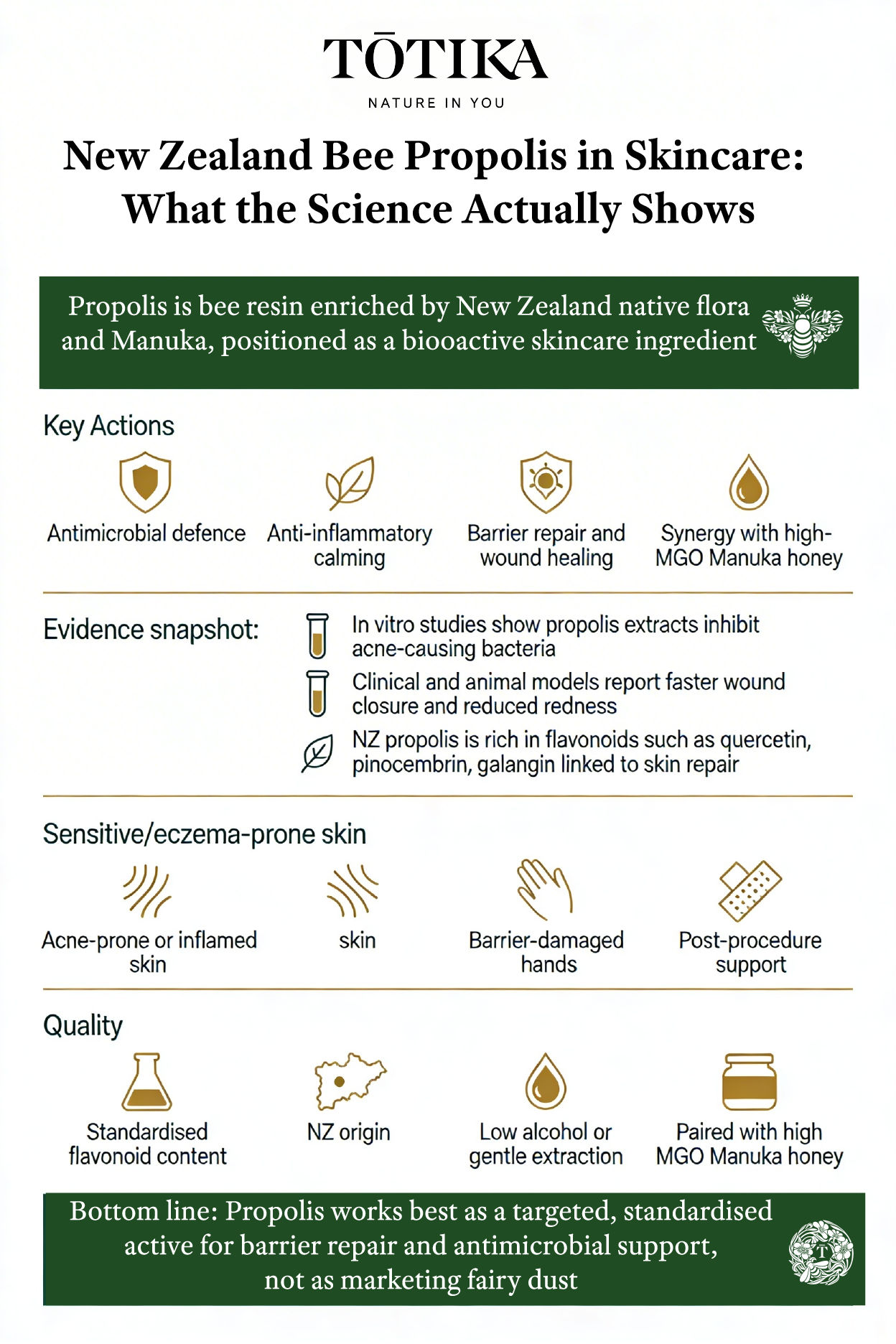
Save and share — full science guide above.
Frequently Asked Questions
Does a higher MGO number always mean better honey?
Higher MGO means greater antibacterial potency, not objectively better honey. For daily consumption, MGO 250+ delivers genuine health benefit. MGO 1050+ is appropriate for specific clinical or wound care contexts where maximum bioactivity is required. Buying the highest grade for toast is unnecessary. Buying MGO 250+ for wound care is insufficient.
Can MGO levels change after I buy the honey?
Yes, and significantly so. In honey with high residual DHA, MGO continues to increase during storage. As our laboratory data shows, an MGO 850+ batch (936 mg/kg at time of testing) stored at 20°C will reach 1,050 mg/kg within four months and continue to 1,450 mg/kg by 24 months. Stored at 34°C, the same honey will peak sooner and then decline. The MGO on your label is the certified minimum at time of testing.
What is the difference between monofloral and multifloral manuka honey?
Both are genuine manuka honey that have passed the MPI 5-attribute test. Monofloral means the honey comes predominantly from manuka nectar, producing higher and more consistent MGO concentrations. Multifloral means the honey includes a meaningful contribution from other floral sources, resulting in lower average MGO. The higher 3-PA values in our 850+ grade (1,280 mg/kg) compared to our 550+ grade (990 mg/kg) illustrate this directly.
Is New Zealand manuka different from Australian manuka?
Taxonomically, Leptospermum scoparium grows in both countries. Some Australian Leptospermum species also produce honey with NPA. The 2022 Green et al. study found that while Australian samples can show meaningful NPA, New Zealand manuka honeys demonstrated the highest and most consistent MGO concentrations. New Zealand also has the most established certification and regulatory framework, including the mandatory MPI 5-attribute standard. These are findings of peer-reviewed research, not marketing claims.
How does Tōtika Health ensure MGO accuracy?
Every Tōtika batch is tested by R J Hill Laboratories Limited in Hamilton, an IANZ-accredited facility. The 3-in-1 Honey Method (uHPLC/UV-Vis analysis) measures DHA, HMF, and MGO simultaneously from the same sample. MPI classification testing uses LC-MS/MS analysis for the four chemical markers and real-time PCR for manuka DNA quantification. All certificates are available upon request for any batch.
Research and Development: Wound Care and Skin Infection Applications
The antibacterial and anti-inflammatory properties of high-grade MGO manuka honey have long been of interest to clinical researchers working in wound care, burns management, and skin infection treatment. Tōtika Health is currently engaged in active research and development in this area, exploring the application of certified MGO manuka honey in clinical settings. Further information will be made available as the programme develops.
References
Peer-reviewed research
- Green KJ, Lawag IL, Locher C, Hammer KA (2022). Correlation of the antibacterial activity of commercial manuka and Leptospermum honeys from Australia and New Zealand with methylglyoxal content. PLOS ONE, 17(7), e0272376. https://doi.org/10.1371/journal.pone.0272376
- Thierig M, Raupbach J, Wolf D, Mascher T, Subramanian K, Henle T (2023). 3-Phenyllactic acid and polyphenols are substances enhancing the antibacterial effect of methylglyoxal in manuka honey. Foods, 12(5), 1098. https://doi.org/10.3390/foods12051098
- Hattingh A, et al. (2023). Combinatorial efficacy of manuka honey and antibiotics in the in vitro control of staphylococci and their small colony variants. Frontiers in Cellular and Infection Microbiology. https://doi.org/10.3389/fcimb.2023.1254402
- Adams CJ, et al. (2008). Isolation by HPLC and characterisation of the bioactive fraction of New Zealand manuka (Leptospermum scoparium) honey. Carbohydrate Research, 343(3), 651–659.
- Henle T (2008). Identification and quantification of methylglyoxal as the dominant antibacterial constituent of manuka honeys from New Zealand. Technical University of Dresden.
Regulatory and certification sources
- New Zealand Ministry for Primary Industries (2021). General Export Requirements for Bee Products. MPI Technical Papers 2017/30 and 2017/31 (modified). Wellington: MPI.
- New Zealand Food Safety Authority. Food Standard: Tutin in Honey (2016). Wellington: NZFSA.
- R J Hill Laboratories Limited (2025). Certificates of Analysis 3951021-hpmp-4v1, 3951021-hpmp-5v1, and 3951021-HGPv1. IANZ Accredited Laboratory, Hamilton, New Zealand. Tested August 2025.
- R J Hill Laboratories Limited (2026). Certificates of Analysis 4091693-hpmp-1v1 and 4091693-HGPv1. IANZ Accredited Laboratory, Hamilton, New Zealand. Tested February 2026.